Friday, March 4, 2022

From the Gardening Columnist Gavin Prumatico: The Benefits of Growing a Garden


     Did you know that growing a garden has many mental and physical benefits? As most of you know growing a garden can provide fresh produce which provides a healthy lifestyle. Gardening can be expensive if you buy pre-grown plants at commercially grown stores like Home Depot, Lowes, etc. But if you start your garden from seed you can save hundreds of dollars. Nothing tastes better in my opinion than going outside and picking fresh produce right off the stem to cook in meals. Also, some grocery stores charge more than it would cost for a packet of seeds so you would be wasting money and not get as much produce as you would from your garden.


Another one of the many benefits of owning a garden is that it is a good hobby to have. Not only does gardening keep you busy but it also keeps you from staying inside all of the time, especially with warm weather. When you know that something is depending on you to live you feel the need to care for it. This makes me go outside every day even on the days I feel like being a little lazy. So no matter what day of the week it is I still go outside multiple times a day to check on my garden.


Gardening does not only provide some of the freshest produce you will ever eat but also provide sponges, that’s right sponges! There is a vegetable named Luffa! Luffa is a vegetable in its early stages of life. But when it drys out, you use loofah as a sponge for dirty dishes and exfoliating your skin. So as you can see gardening does not only provide vegetables but essentials around the house. Another example of something that you grow that doesn’t get eaten is a birdhouse gourd. Birdhouse gourds are carved and used to make birdhouses for birds to live in. These birdhouse gourds can be painted and look lovely hanging from a warm inviting home.

    Did you know that gardening can make money? I personally sell my organic produce I grow in my farmstand at the end of my driveway. I also sell my produce to nearby restaurants to make money. This way everything I purchased for my garden (soil, plants, and seeds) is all paid off and I make a little fortune as well. I do not charge myself expensively unless the item of the produce is exotic (not grown locally). But I grow a lot of exotic produce so I make enough money to sell other things at my farmstand like beef jerky, chapstick, etc.


I hoped you all enjoyed this article! Have a great day! 


A Film Review by Alexus Twyman

 The Sound of Music (1965) - Film Review:

The Sound of Music is a film that has stood the test of time and resonated with audiences for years due to its relatable themes, beautiful scenery, and breathtaking cinematography. The film begins with the jovial Maria singing out on the vast hillsides of Austria, distracted from her work as a nun at the abbey. Upon her return, Maria is admonished for her distractive nature by the other nuns and is sent to be a nanny to prove her worthiness as a nun. Maria is daunted by the task of being a governess to seven children of widowed former Captain von Trapp, whose strict rules she hesitates to enforce. The film follows Maria as she navigates the situation and brings her zeal for life and love of music into the household. 

Throughout the film, producer and director Robert Wise, often uses a variety of wide pan and shots to establish the rural setting of Salzburg, Austria. The Sound of Music was filmed on location, in Salzburg, Austria, which serves to make the film feel more realistic. 

The von Trapps are portrayed on screen as a fictionalized version of the real life family with slight differences in the story. In reality, Maria was more strict while the Captain and his first wife encouraged musical talents in their children, who were not the same gender and ages as those portrayed in the film. Despite its historical inaccuracies, The Sound of Music is a wonderful musical with generally good writing. 

 Julie Andrews’ Maria is the anchor of the film, holding it together while breathing life into the role. The singing, while difficult to capture on camera, is done expertly with each of the characters, including the Captain, becoming more established as the film progresses. The artistic use of the hills and landscape of Austria serves to provide a sense of freedom and contribute to the film’s themes of family and love.      

Overall, The Sound of Music is a nostalgic film, using bright colors and imagery to paint a portrait of Austria as a friendly and hospitable country. The film focuses on the relationship between governess Maria and the Von Trapp children, with the background of World War II. Throughout the film, characters reference the ongoing war, with multiple instances of foreshadowing Germany’s eventual invasion of Austria. The Sound of Music uses the location of Austria to establish the setting as well as to move the plot along, creating a real-time feel to the movie.   

The Sound of Music was filmed in 1965, with the use of the Mitchell BNC Camera and Modern Cinema Systems MC-70, to produce a variety of effects. The film was nominated for ten Academy Awards and won five, including best picture and best director. Since The Sound of Music was released in 1965, the film has gone on to receive critical acclaim and praise from audiences across the world. 


Sources used:

  • “The Sound of Music (1965).” ShotOnWhat?, 15 June 2019, https://shotonwhat.com/the-sound-of-music-1965#:~:text=The%20movie%20The%20Sound%20of,and%20editing%20by%20William%20Reynolds. 

  • Bauer, Patricia. "The Sound of Music". Encyclopedia Britannica, 4 Aug. 2017, https://www.britannica.com/topic/The-Sound-of-Music-film-by-Wise. Accessed 14 January 2022.

Bertram, Colin. “The Von Trapps: The Real Family That Inspired 'the Sound of Music'.” Biography.com, A&E Networks Television, 5 Feb. 2021, https://www.biography.com/news/real-von-trapp-family-sound-of-music

Wednesday, January 19, 2022

Seniors Only

By Nick Pollard

 When it comes down to it, school bathrooms aren’t really a hot button issue that often. Sure, you hear occasional stories that go around the rumor mill, but outside of that there isn’t that much of a discussion about them. Recently however, multiple incidents regarding vandalism have resulted in indefinite closure of most of the bathrooms at NWR. Now if you’re trying to go to the bathroom, you have to walk down to the only open one by the cafeteria, and wait in this never ending queue before it’s your turn. 


This abrupt change didn’t sit too well with some of the seniors, however. On top of trying to make the most of their last year of high school, now they had to wait in an absurdly long line just to go to the bathroom. So a few weeks ago, on their own initiative, a group of seniors elected to open a “Senior Only Bathroom” using an older, rarely used set of bathrooms by the gym. The other day I got the chance to talk to Jack Close about his involvement with the set up, and asked how the whole operation got started. Jack said  “...Me and some friends were sick of the long lines at the bathroom, so we asked Mrs. Ritchie and she agreed to give us our own...” In addition to their own exclusive bathroom, there's also a senior seated outside to check whether someone can go in or not. Jack said this was because “...underclassmen trashed the other bathrooms, so we don’t want them going in there and messing it up again...” 


When asked about his overall feelings of the bathrooms closing, Jack said “...It’s annoying for the student body, but understandable on the school's part...” and that it was a “...harsh but necessary step to take...” It’s also important to remember that your actions speak volumes for everyone around you, so if you’re messing up bathrooms or breaking school property for whatever reason, just keep in mind we all get punished if you do something stupid.


Despite one isolated incident, everyones been pretty successful in keeping watch of who they let in the Senior Bathroom. But, there’s still the problem of someone not always being out there to keep watch/let anyone in. So, if you have a study hall, and want to help out your fellow seniors, feel free to lend a hand and enjoy the exclusive privilege of having a functioning bathroom to yourself.


Gavin's Seed Starting Information

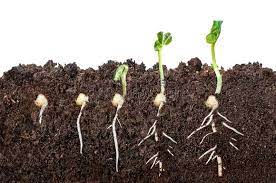
   Hello, my name is Gavin Prumatico. You may have seen me in hallways or classes and I would like you all to know I am very passionate about plants. I am the vice president of FFA for the school. For those who don’t know what FFA is, it’s an acronym for Future Farmers of America. So today, we are going to talk about when to start your seeds whether you have a garden or are planning to start one. There are many tips and tricks to start your seeds properly for higher germination rates. Let’s get started with some of them.

First: You need to pre-soak the seeds you plan on growing for 24 hours because seeds stay dormant until they acquire enough water to grow. So by pre-soaking your seeds, you’re making the germination rate higher and the seeds will grow faster.

Second: During the winter the weather is unstable since it is constantly changing. This means that you have to start your seeds indoors with a grow-light and a heater so the grow-light acts as a sun. Seedlings need about 14-16 hours of sunlight/grow-light a day. The heater will act as a warm summer day but heaters lower humidity so you have to check the soil’s water content regularly.

Third: Make sure your seedlings are not cold or hot because both will reduce the time it takes for seeds to germinate. Also, make sure you do not plant your seeds too deep into the soil of your seed starting pods since they won’t get enough light to germinate.

Fourth: Last but not least when the seedling has three to four leaves it is ready to be transplanted to a new pot. If you don’t transplant your seedlings your succession rate may go down from the lack of space for the plant’s roots to grow.

Usually, a safe time to plant seedlings is after the last winter frost. The last winter frost is usually in early May right after Mother’s Day. On every single seed packet, there’s an estimated time of germination which is very helpful to see if your seeds are running behind or they are very early. I can say from my experience that all of the steps from above work very well and have given me plenty of beautiful flowers, vegetables, and fruits. Have a great day, and hopefully, you all have liked my very first article!

The Predicament of Philanthropy

By Kathryn Swistak  

    The phrase, “help those who cannot help themselves” is a general principle of the practice of philanthropy. To be philanthropic is to regard others’ needs and treat them with goodwill, especially when in a better equipped or more favorable situation. Often seeded high in the financial brackets of life, those who contribute to society typically do so in a fiscal manner through large monetary donations to the charity or cause deemed a fit enough investment. After all, Andrew Carnegie, father of the great Gospel of Wealth, wrote how the most important part of helping others is “to provide part of the means by which those who desire to improve may do so; to give those who desire to use the aids by which they may rise; to assist, but rarely or never to do all” (Carnegie). Essentially, Carnegie’s cardinal rule of donation is to contribute to causes that have a sizable return on investment, either through fiscal or social reward.

      The issue in contemporary society regarding this practice is its gradual movement from goodwill to one of public relations as a social elevation tool. In past societies, philanthropic endeavors were the building blocks of society necessary for the advancement of wealth, academics, and the growth of industry; yet, today they simply are actions ultra-wealthy citizens take in an attempt to conceal the clandestine nature of the double-edged sword hidden amongst their olive branches. Although there is no “how to be a good person” handbook, I am almost certain once you have reached a high status in life, the “what to do with my money when the amount is larger than any singular person could use in one-thousand lifetimes” chapter would light up with a fluorescent “Read Me!” sign. If society, as a whole, can revert back to philanthropy’s origins, as opposed to a way for rich individuals to “one-up” their friends, then more people would participate, and the extremely wealthy would not have to parse together whether or not it is their social responsibility to be decent humans. Instead,  it would become the societal norm to share good fortune with the less fortunate.

 Now one might think, “what if you are born into a rich family? It’s not your fault you are better off than others, why should you have to give away your family legacy?”, and the only possible way in which one can answer that is with another question, specifically, “what did they do to deserve such luck?”. It is an unanswerable question, but when it comes down to it, can one even compare the meticulously crafted legacies— foundations of knowledge with the resources and potential to impact the lives of hundreds maybe thousands of individuals— to the financial well being of the few they impact in the most direct human way? Upon the death of Andrew Carnegie, his will dictated that ninety percent of his fortune be donated to worthy causes. Carnegie Mellon University, Carnegie Hall, and the World Court in The Hague are all modern beneficiaries of his generosity, a legacy almost more respected than the man himself, but that remaining percent has amplified the modern concept of generational wealth tenfold. If wealth, especially that accumulated through generations of questionable practices, is passed on from heir to heir, then can there truly be a way in which those terrible circumstances will be recorded and remembered without the possibility of the conveniently timed removal of “rumored truth” besmirching the legacy of well-respected business moguls and family names? The short answer to the long-asked question is no.

      As billionaires of today continue to support charities while elevating their personal status, the question arises regarding the effectiveness of contemporary efforts. Philanthropic generosity, particularly due to its aura of showmanship, has begun to air on a side of suspicion, at least in part due to the immoral actions of those who use the benevolent appearance as a facade for less-than-angelic activities. Since the days of Carnegie, the government has established a robust social safety net, designed to assist those in need, but the question once again arises, if the more fortunate were to step in and assist others through altruistic action, how would any form of organization or government manage to effectively and equitably distribute those resources? It is of the highest importance to consider all conditions present, and if one were to take Carnegie’s approach, it would be dependent on the odds of a potential payout.


Rage Against The New Machine

By Anthony Benincasa 


We spend more time with them than we do sleeping, and no, I’m not talking about our family members. I’m talking about cell phones. According to ABC News, the average American teenager spends over seven hours on their cellphones daily. Are these advances in technology helping or hurting our society? 

When the iPhone stepped onto the scene in 2007, it caught the immediate attention of people all around the United States, with sales for Apple going into the billions. According to Forbes, the iPhone has generated $365 billion in 2020 alone. Since 2007, Apple, Samsung, and other smartphone sales have increased exponentially. Today, over two thirds of Americans own a smartphone, according to Reviews.org. Smartphones were made for convenience- no need to go on a computer to do a Google search, or to search for a skateboard fail on Youtube; now, these tools are reliably available to use 24/7. These genius tools may be convenient for our daily lives, but can come with repercussions. 

As stated by The National Safety Council, 1.6 million people per year in the United States have car accidents due to cell phone usage while driving. That’s a whopping quarter of all car accidents that occur in the United States per year. Not only has driving become more dangerous, but cell phone usage also affects our health.  According to Marrissa Barnett, Principal Optometrist at UC Davis Eye Center, the “blue light” that emits from our screens has been found to be quite dangerous to the eyes, creating eye strain for many individuals.

Doctors today do not know all the prolonged health risks from cell phone usage, although according to Cancer.gov, the radiation being emitted from cell phone use is low frequency and does not pose a great risk at this time. However, we do not know the long term effects of this low frequency radiation on our bodies. 

The smartphone has helped in a tremendous way transform us as a society. A smartphone can be a great learning tool. In addition, due to the vast number of cell phones in the US, this is an excellent tool to have during an emergency when EMS is needed. We could even do a quick Google search “how to perform the heimlich maneuver” when someone is choking. Conversely, we cannot let cell phones take over our entire lives. It can be entertaining to enjoy the many features of the smartphone, but a conversation with friends face to face is essential for interpersonal skills. 


A Book Review by John Stracco

Dune 

Any book that has a 23 page appendix of terms necessary to be able to understand the plot is one that I, or anyone else, would not usually pick up. So then, why did I decided to read Dune? The simple answer is I wanted to watch the movie (which is a cinematic masterpiece); however, the book is often regarded as one of the foundational stories of the sci-fi world.

The book dives into a dense world centered around one thing: spice. This magical dust can only be found on the planet Arrakis and is the only fuel for interstellar travel. Arrakis is also the most dangerous planet in the entire imperium. There are storms with winds over 800 kilometers per hour and sand that can destroy metal. There are sandwords that can reach over 400 meters in length and hunt anything that makes rhythmic beats in the sand. Not to mention the incredibly high temperatures that only allow people to travel at night. Here, water is the most valuable resource imagined and the only group that has successfully cultivated “dessert power” are the native fremen. They use stillsuits to keep their body’s moisture in and are characterized by their blue eyes due to spice exposure.

In the story of Dune, the emperor gives House Atreides the fief of Arrakis, and control of spice production, and takes it away from previous rulers, House Harkonnen. However, the devilish Harkonnen Barron is determined to get his precious fief back. This epic sci-fi adventure is centered around Paul Atreides and his quest to cultivate desert power, find the woman who enchants his dreams, and bring peace to the imperium.

The plot of this book is amazing and tells a first-of-its-kind story for the time. The book is also a product of its time. Gender roles of the 1960s are not forgotten in Dune as women are often regarded as spiritual, elegant, thinkers who are bound to their man. There are moments when men take multiple women as wives and even win them in battle. The medieval concept of marrying off your children is also present with it being used to bring different houses together for the benefit of the imperium. Men are depicted as brute, strong, and anything else you’d associate with 1960s gender roles. 

As previously mentioned the book has many references to the medieval, given it was written off of that time period. There are houses that control fief’s and marry off their children. And in the case of the Bene Gesserit, there is selective breeding in order to play with genetics to create “the one”. All of these concepts are things we learned in history class, but now have an application to a sci-fi novel.

Another notable fact about Dune is the fact that Star Wars is heavily influenced off of the book. Like the desert planet Tatooine and Arrakis, the Bene Gesserit and the Jedi, or even the Empire and the Imperium. When writing Star Wars, George Lucas was heavily influenced by Frank Herbert’s story so if you are a fan of one of the world's most famous franchises, then maybe give Dune a try.

 Overall, Dune was a book well worth reading. Yes, it's dense; and yes, you may have to overcome that big book fear to get through it, but there is adventure in every corner and something new to learn each page. Frank Herbert’s universe is unmatchable as it is so vivid and the reader can not only picture it in their head, but also feels like they are there suffering the pain of Arrakis with the rest of House Atreides. The book, like the sandworms of Arrakis, is a goliath, but one well-worth getting through; especially with the reward of watching part one of the film at the end.